The places
Reedbeds and Fens
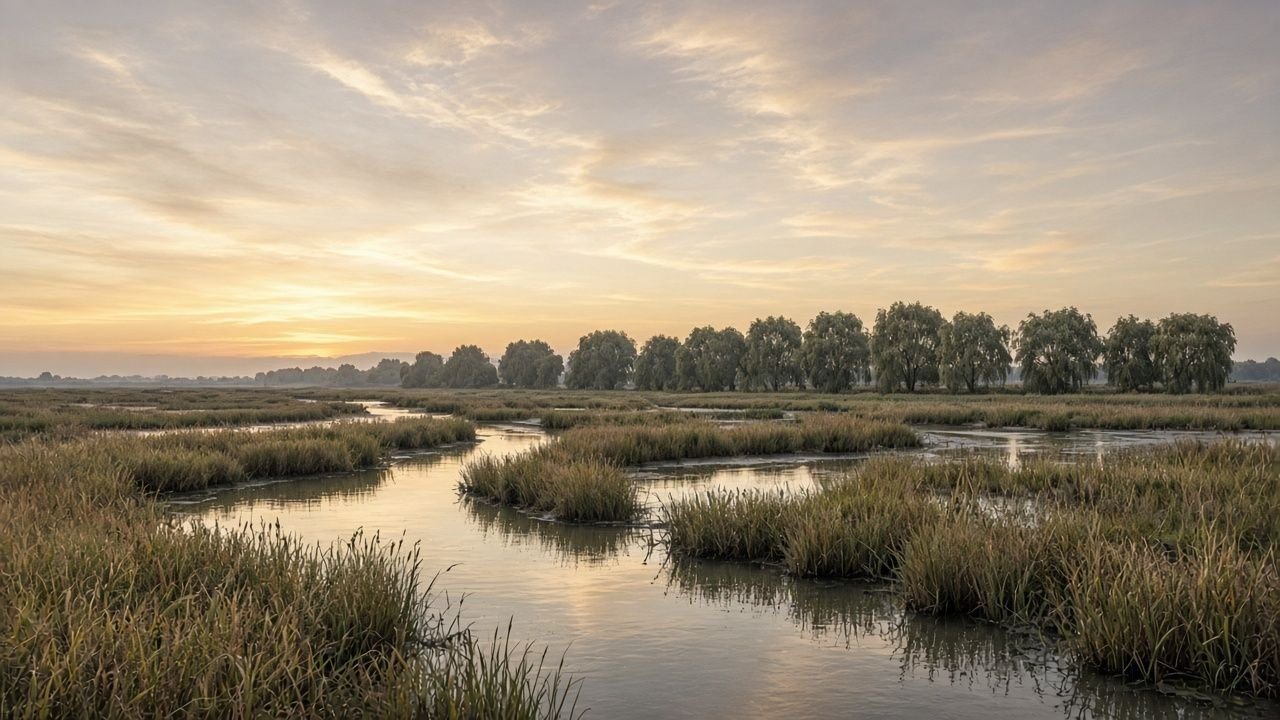
Wetlands are not one habitat but several, arranged in bands from open water to wet woodland. Learning to read them tells you where to look.
Open water
Lakes, pools and slow rivers hold diving and dabbling ducks, grebes and fish-eating birds. Kingfishers fish from low perches over clear, shallow water.
Reedbeds
Tall stands of common reed grow in shallow water at the margins. They shelter secretive birds such as bitterns, rails and reed warblers, and give herons an edge to hunt along. Reedbeds are often managed by cutting in winter, which stops them drying out and turning to scrub.
Fens
Fens are wetlands fed by groundwater or streams, often rich in sedges, rushes and wildflowers. They tend to be lower and more open than reedbeds, which makes them good hunting ground for birds of prey.
Wet woodland
As the ground rises and dries a little, willow and alder move in. These damp woods, sometimes called carr, hold their own birds, and are where herons often build their nests.
Why they matter
Wetlands store water, slow floods and support a remarkable number of species. Many have been drained over the centuries, so the ones that remain are precious.